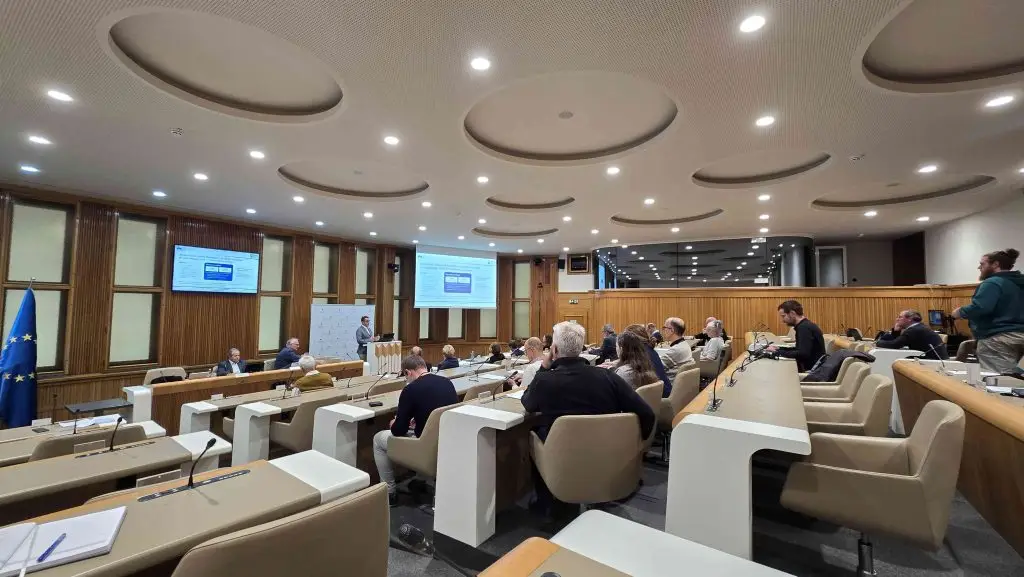
On 6 November 2026, the National Council of the Republic of Slovenia hosted the consultation “Water Balance and Droughts in Slovenia”. The event was organised by the Slovenian National Committee for the UNESCO Intergovernmental Hydrological Programme (IHP UNESCO), the National Council’s Commission for Education, Culture, Science, Sport and Youth, the Slovenian Academy of Engineering and the Slovenian Association of Engineers.
The consultation focused on hydrological droughts, changes in water availability and the necessary adaptations in water management. It continues the efforts of the Slovenian hydrological community, under the auspices of IHP UNESCO, towards science-based water management in a changing climate.
Dr Sašo Šantl from the Institute for Water of the Republic of Slovenia (IzVRS) and Dr Mitja Janža from the Geological Survey of Slovenia (GeoZS) gave a lecture entitled “Expert Groundwork for Addressing Water Availability and Use in River Basin Management Plans and the Programme of Measures”.
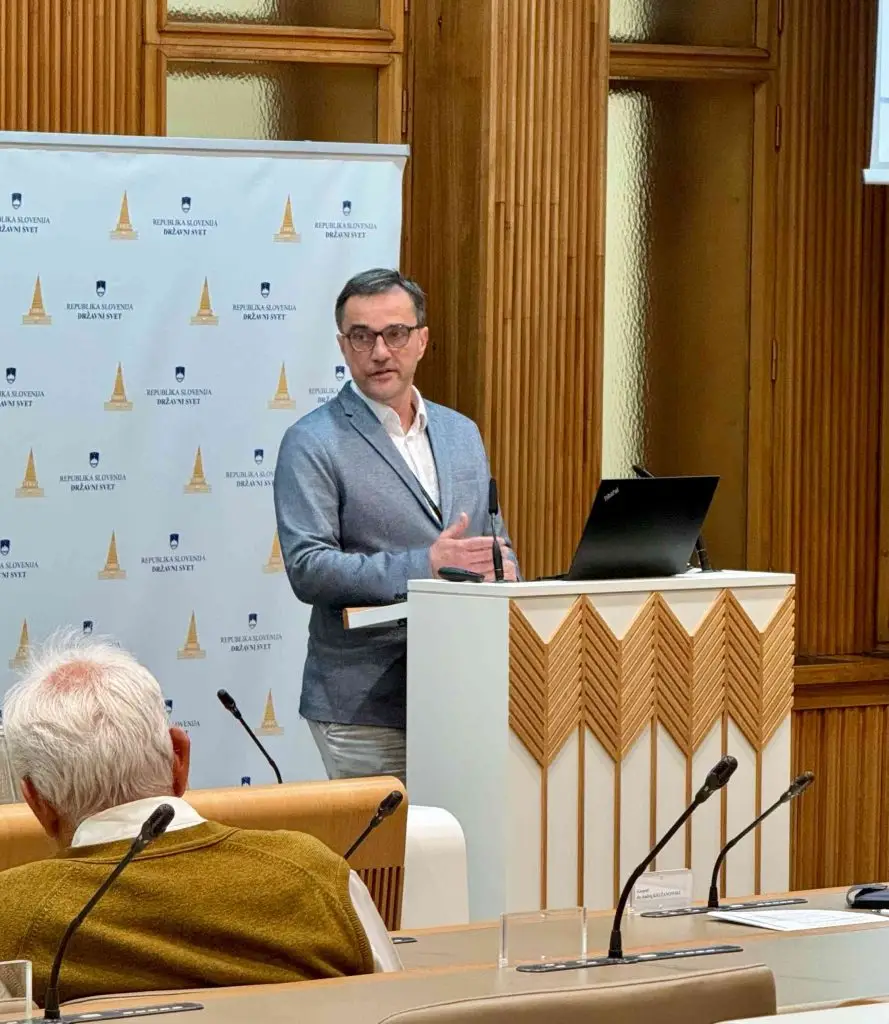
IzVRS and GeoZS prepare this expert groundwork to support the Ministry of the Environment and Spatial Planning in water management and the planning of measures. The groundwork links national registers, water balances, monitoring data, water status assessments and climate projections of the Slovenian Environment Agency with data on existing water use and data from other competent institutions.
The aim of the groundwork is to assess the availability of surface water and groundwater in relation to the needs of different uses, including drinking water supply, irrigation, energy, industry and aquaculture. At the same time, good chemical and ecological status of waters must be ensured, along with the needs of aquatic and water-dependent ecosystems.
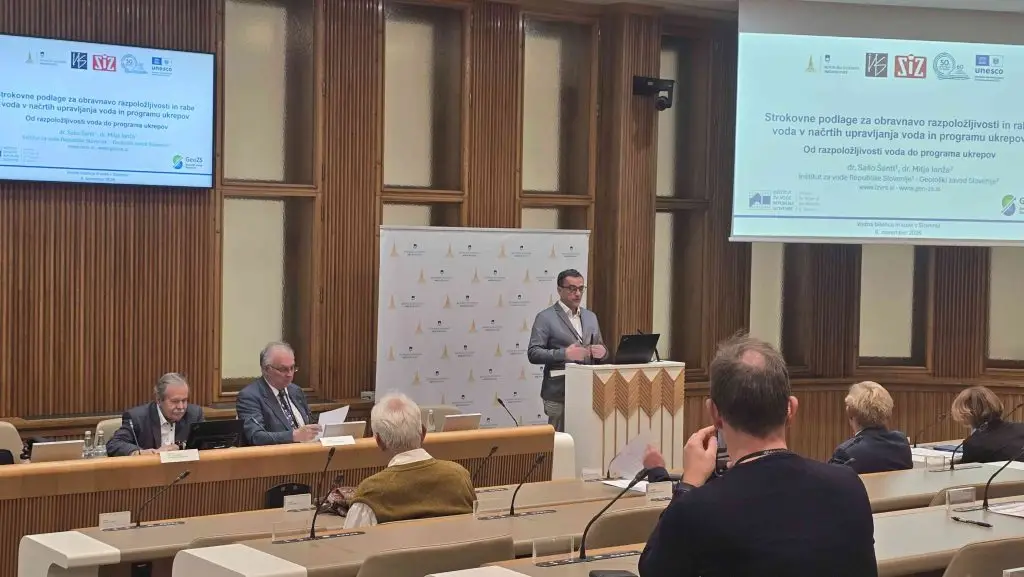
The presentation highlighted that surface water and groundwater must be addressed as a connected system. Water availability is highly seasonal, and the mismatch between available quantities and the needs of users and ecosystems grows even larger during drought periods.
When planning measures, water use must be adapted to the actual availability of water, use efficiency must be improved, losses reduced and the natural water retention capacity of the landscape preserved.
The proposed conclusions emphasised the need for continuous preparation of expert groundwork within river basin management plans and the programme of measures. For long-term expert support to the Ministry, further strengthening of IzVRS and stable support for GeoZS’s expert work on groundwater are essential.